food
Food Collage
A collaborative workshop to connect eating habits with climate, biodiversity, health and social justice, and explore practical opportunities for action suited to everyday life and the needs of organizations.
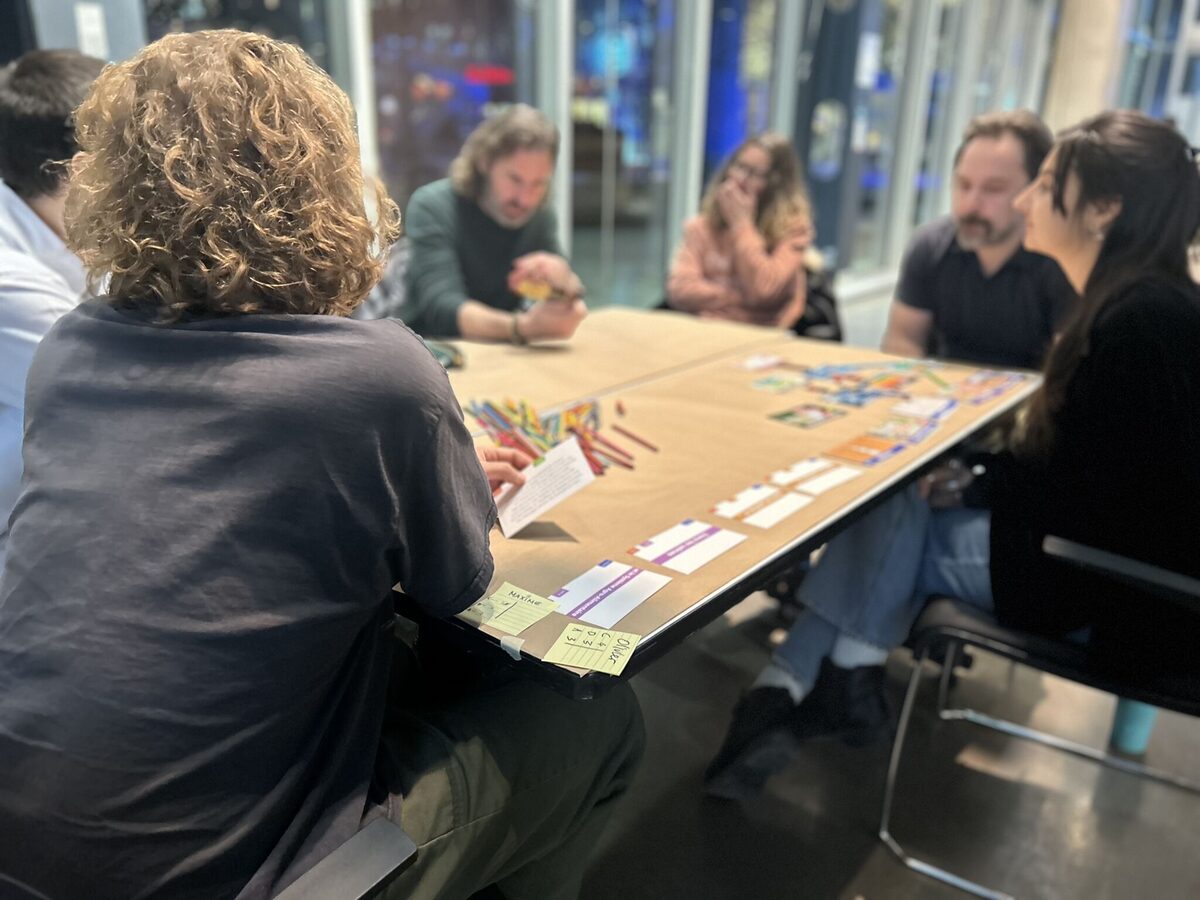
Food Collage connects eating habits with major societal issues: climate, biodiversity, public health and social justice. Inspired by the educational approach of Climate Fresk, it uses cards, quizzes and games to make the complexity of the food system visible. Participants explore the consequences of their choices and discuss possibilities for change. The experience helps build shared reference points without reducing food to a single issue. The group identifies practical actions suited to everyday life or its organizational context, creating a basis for continuing the reflection and considering what can be done individually and together.
“I often wonder whether my food choices are really good for my health and for the planet.”
“In my organization, we talk a lot about sustainability, but rarely about what we eat every day.”
“I would like clearer reference points to better understand the impacts of food and act more consistently.”
These concerns are shared by more and more people and organizations.
Food sits at the heart of environmental, health, and social issues, yet we rarely get the chance to explore them in a structured and accessible way.
Food Collage is a collaborative workshop that helps participants connect their food habits, their impacts, and the possible levers for action.
Through an interactive and playful experience, participants build a shared systemic understanding and identify concrete solutions to transform practices at both the individual and collective levels.
This workshop is a powerful awareness and engagement tool that helps teams, companies, and communities move from intention to action.
- This workshop is developed by its own association. Ecogames helps organize it, include it in public events, and connect venues with trained facilitators.
- Ecogames distributes more than half of registration fees back to the workshops' supporting associations, funding their deployment, evolution, and updates.